Best Adults Only Hotels for Solo Travelers: The 2026 Editorial Reference
The orchestration of a solo journey in the high-end hospitality sector has shifted from a marginal travel segment to a primary driver of architectural and service design. For the independent traveler, the objective is rarely just the absence of children; it is the presence of an environment that facilitates either radical autonomy or high-fidelity social integration without the prescriptive “couples-only” atmosphere that historically dominated the adults-only market. Achieving this balance requires a sophisticated understanding of how physical space and service protocols influence the psychological comfort of an unpartnered guest.
In the current landscape of 2026, “solo” does not necessarily imply “solitary.” It represents a state of managed autonomy where the guest retains absolute control over their social exposure. Properties that successfully cater to this demographic recognize that a solo traveler’s cognitive load is different from that of a group or couple. Every decision, from navigation to dining logistics, falls on a single individual. Consequently, the most effective service models are those that reduce “logistical friction” while maintaining a high degree of privacy and safety.
This pillar article provides an analytical framework for identifying the global hospitality nodes that offer the most robust support for independent exploration. We move beyond superficial amenities to examine the systemic infrastructure—acoustic management, communal architecture, and predictive service—that defines the highest tier of the industry. By auditing these properties through the lens of a senior editorial writer, we establish a definitive reference for those who view travel as a mechanism for personal restoration and intellectual expansion.
Understanding “best adults-only hotels for solo travelers”
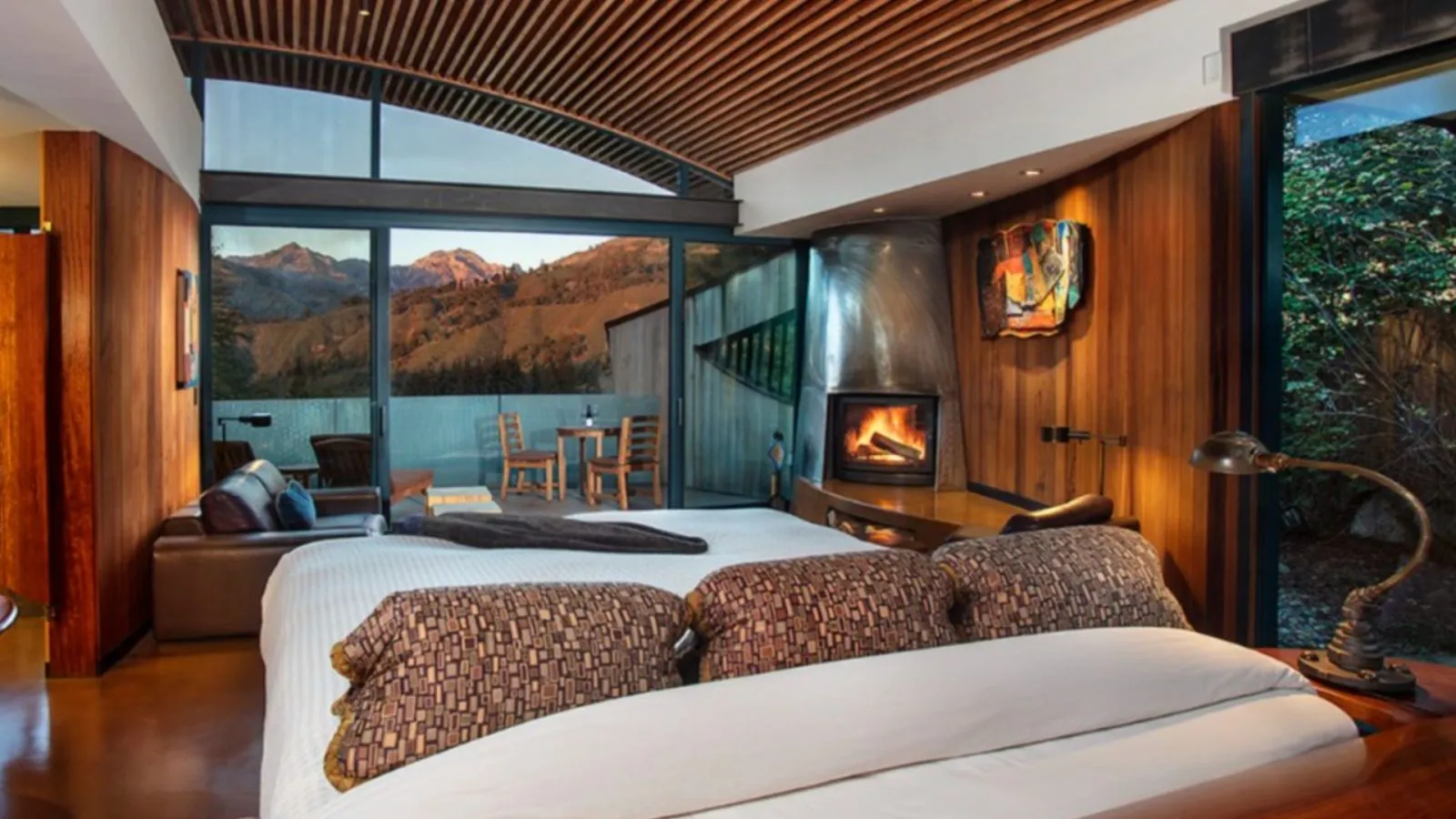
To accurately identify the best adults-only hotels for solo travelers, one must first dismantle the industry’s long-standing bias toward dual occupancy. A common misunderstanding in hospitality planning is the assumption that an “adults-only” tag primarily serves the romantic market. While honeymooners remain a significant demographic, the needs of a solo traveler are often diametrically opposed to the “couples bubble” architecture found in many Caribbean or Mediterranean resorts. For the solo traveler, the risk of oversimplification lies in choosing a property that technically excludes children but effectively isolates single guests through a lack of communal hubs or a service culture that treats unpartnered dining as an anomaly.
True mastery of this niche involves auditing a property’s “Social Permeability.” This measures the ease with which a guest can transition from private restoration to communal engagement. A resort with only private villas and no central “gravity point” (like a curated library, communal table, or open-atrium bar) can lead to social atrophy. Conversely, a property that is too “vibrant” or socially aggressive can violate the guest’s need for sovereign isolation. The “best” options provide a choice-driven architecture where the environment nudges, rather than forces, social interaction.
Furthermore, safety and psychological security are paramount. For the solo traveler, the “best” hotel is one where the service staff is trained in “Invisible Guardianship”—a methodology where the staff maintains a high level of situational awareness regarding the solo guest’s well-being and schedule without being intrusive. This eliminates the “anxiety of invisibility” that many solo travelers feel in massive, high-density resorts where they may be overlooked by service teams optimized for larger groups.
Deep Contextual Background: The Evolution of the Independent Guest
Historically, the solo traveler was an afterthought in the hospitality industry, often penalized by “single supplements” and relegated to smaller, less desirable rooms. The 19th-century “Grand Tour” was a collective experience, and the mid-20th-century resort boom focused exclusively on the nuclear family or the romantic pair. It wasn’t until the early 2010s that the “Solo Economy” began to force a structural redesign of hotel service plans.
Entering 2026, we have transitioned into the “Post-Connectivity Era.” Travelers are increasingly seeking child-free environments not just for quiet, but as a site for “Deep Work” or “Radical Presence.” This shift has prompted top-tier hotels to move away from the “Couples Only” branding of the 1980s toward a more inclusive “Adult Sovereignty” model. In this current phase, the absence of minors is seen as a baseline requirement for a sophisticated environment where the focus is on the maturation of the guest’s experience—whether that guest is traveling with a partner or navigating the world alone.
Conceptual Frameworks and Mental Models
When evaluating hospitality assets for solo use, three mental models provide the necessary analytical depth.
1. The Social Density Gradient
This framework assesses how a hotel manages its communal spaces. A well-designed hotel for solo travelers has a “Gradient” of spaces ranging from “Zero Contact” (private terraces) to “Low Contact” (libraries, quiet pools) to “High Contact” (communal dining, workshop spaces). The ability to move fluidly through this gradient without social awkwardness is the hallmark of a top-tier property.
2. The Transactional Friction Model
Solo travelers bear 100% of the administrative burden of their trip. This model evaluates the “Total Effort Score” of a stay. The highest-rated hotels use predictive logistics—such as AI-augmented concierge services that handle transport, reservations, and gear rentals seamlessly—to ensure the guest spends their time on “Experience” rather than “Coordination.”
3. The Sovereign Isolation Framework
This model prioritizes the guest’s right to be alone without being lonely. It audits whether the service culture supports “Solo Dignity.” Does the restaurant offer high-quality seating for one that isn’t near the kitchen door? Does the staff acknowledge the solo guest with the same level of ceremony as a large party? This framework measures the respect for the guest’s independent status.
Key Categories and Operational Trade-offs
The choice of a hotel involves a deliberate trade-off between social opportunity and private restoration.
| Category | Primary Benefit | Key Trade-off | Ideal For |
| Boutique “Hushpitality” | Radical quiet; privacy | Limited social networking | Deep Work / Recovery |
| The Managed Enclave | Security; high service-to-guest ratio | High cost; gated feel | Security-Conscious Solos |
| Social Integration Node | High networking; communal activities | Potential overstimulation | Extroverted Explorers |
| Wellness Sanctuary | Bio-optimization; medical-grade health | Rigid schedules; dietary limits | Physical Transformation |
| Urban Intellectual Hub | Cultural access; walkability | High ambient noise (external) | Cultural Immersion |
Realistic Decision Logic
When deciding, the traveler should apply the “80/20 Rule of Intent.” If 80% of the goal is restoration, choose a Boutique Hushpitality node. If 80% is cultural or social expansion, choose a Social Integration Node. Attempting to find a “perfect 50/50” often leads to a stay that fails to deliver on either front.
Detailed Real-World Scenarios
The “Digital Nomad” Deep Dive
-
The Constraint: A professional needing to finish a project while enjoying a high-end environment.
-
Failure Mode: Choosing a “social” resort with high background music and frequent interruptions.
-
The Optimal Choice: A boutique child-free hotel with dedicated high-bandwidth “Silent Zones” and ergonomic in-room workstations.
The Post-Burnout Recovery
-
The Constraint: A traveler seeking zero social obligation after an intense corporate stint.
-
Failure Mode: A hotel with “communal dining only” policies.
-
The Optimal Choice: A Wellness Sanctuary where meals are personalized and can be taken in various private, high-atmosphere “Nooks” throughout the property.
Planning, Cost, and Resource Dynamics
The financial landscape for solo travel has matured, with many top-tier properties now eliminating the single supplement in favor of “Occupancy-Neutral” pricing.
Range-Based Daily Resource Estimation (Per Solo Traveler)
| Tier | Price Range (USD) | Service Level | Expected Outcome |
| Premium Standard | $300 – $600 | Reactive; standardized | Efficient, reliable, quiet |
| High Luxury | $700 – $1,500 | Predictive; personalized | Managed autonomy; high security |
| Ultra-Sovereign | $2,000+ | Bespoke; 2:1 staff ratio | Total life-optimization |
The “Opportunity Cost” of a poorly selected hotel for a solo traveler is the loss of “Uninterrupted Thought.” If the environment is too chaotic or the service is too friction-heavy, the psychological value of the solo trip evaporates.
Tools, Strategies, and Support Systems
To maximize the utility of the best adults-only hotels for solo travelers, guests should utilize specific strategies:
-
Pre-Arrival “Acoustic Audit”: Requesting rooms away from communal hubs or service elevators to ensure total sleep hygiene.
-
The “Solo-Dining Service Agreement”: Communicating dining preferences early (e.g., “I prefer a quiet corner with a view for reading”).
-
Safety Telemetry: Utilizing the hotel’s internal transport and security apps for late-night movements in urban or remote settings.
-
The “Predictive Concierge” Brief: Providing a 3-point list of “Must-Haves” versus “Deal-Breakers” 72 hours before arrival.
-
Community Filtering: Identifying hotels that host specific workshops or “Salons” that align with professional or intellectual interests.
-
The “Invisible Guard” Protocol: Opting into check-in systems that alert the hotel if the guest hasn’t returned by a specified time from a solo excursion.
Risk Landscape and Failure Modes
The primary risk in solo travel is “Service Erosion.”
-
The Isolation Loop: When a property is so private that the solo guest goes 48 hours without a meaningful human interaction, leading to a “cabin fever” effect.
-
The “Second-Class” Bias: When staff prioritize couples or groups for prime seating and excursions, assuming the solo guest has more flexibility.
-
Atmospheric Drift: When a quiet hotel unexpectedly hosts a loud corporate event, it shatters the restorative goal of the solo traveler.
Governance, Maintenance, and Long-Term Adaptation
A solo traveler should treat their travel portfolio like an asset class.
-
Review Cycles: After every stay, audit the “Friction Score”—how many times did you have to ask for something twice?
-
Adjustment Triggers: If a property begins to allow “Family Weeks” or lowers its age limit, it should be removed from your “Sovereign Node” list.
-
The Personal Travel Ledger: Documenting specific room numbers and staff names to ensure continuity of service in future years.
Measurement, Tracking, and Evaluation
How do you quantify a successful solo stay?
-
Leading Indicator: The speed and quality of the pre-arrival interaction with the concierge.
-
Lagging Indicator: The “Post-Trip Integration Period”—how long does the sense of restoration last after returning to the professional environment?
-
Qualitative Signal: The number of hours spent in “Deep Flow” or “Active Recovery” versus “Logistical Management.”
Common Misconceptions and Oversimplifications
-
Myth: “Solo travelers are looking for a date.” Correction: Most high-end solo travelers are seeking intellectual or physical restoration, not romantic partners.
-
Myth: “Single rooms are always smaller.” Correction: Modern “Solo-First” hotels offer full-sized luxury suites designed for single occupancy.
-
Myth: “All-inclusive is a bad value for solos.” Correction: For those seeking to eliminate transactional friction, the “all-in” model provides significant psychological relief.
Ethical and Practical Considerations
In an era of high-resource consumption, the solo traveler must consider the “Footprint of Solitude.” Occupying a space designed for two as a single guest has environmental and economic implications. Supporting hotels that prioritize sustainability and local labor ensures that your private restoration doesn’t come at the cost of the local community’s well-being.
Conclusion
The pursuit of the best adult-only hotels for solo travelers is ultimately an investment in the self. It requires a move away from the “standard” vacation towards a “managed ecosystem” of leisure. By selecting properties that respect the “Social Density Gradient” and prioritize “Invisible Guardianship,” the solo traveler can achieve a level of restoration that is impossible in multi-generational or couples-centric environments. The future of travel is not just about where we go, but about the degree of sovereignty we maintain while we are there.