
How to Manage Dietary Restrictions at Resorts: The Definitive Guide
The intersection of specialized nutrition and large-scale hospitality represents one of the most complex operational challenges in the modern travel industry. For travelers with medically necessary or ethically driven diets, the resort environment—characterized by high-volume buffets and rotating kitchen staff—can transition from a place of relaxation to a landscape of constant vigilance. The perceived simplicity of an “all-inclusive” experience often masks the structural rigidity of mass-market catering, where cross-contamination risks and hidden ingredients are systemic rather than incidental.
Successfully navigating these environments requires an analytical understanding of how resort kitchens function, from the procurement of bulk ingredients to the hierarchical communication between the front-of-house and the executive chef. It is no longer sufficient to merely “inform the waiter”; true risk mitigation involves a multi-layered strategy that begins months before arrival. As resorts globalize, the linguistic and cultural interpretations of terms like “gluten-free” or “vegan” vary significantly, creating a gap between a guest’s expectations and the actual plate served.
This pillar article deconstructs the mechanics of resort food service to provide a strategic framework for safety and inclusion. By moving beyond surface-level advice, we examine the systemic failures that lead to exposure and the professional protocols that seasoned travelers use to ensure their needs are met without compromising the leisure experience. This is a study in advocacy, logistics, and the granular management of edible risk.
Understanding “how to manage dietary restrictions at resorts”
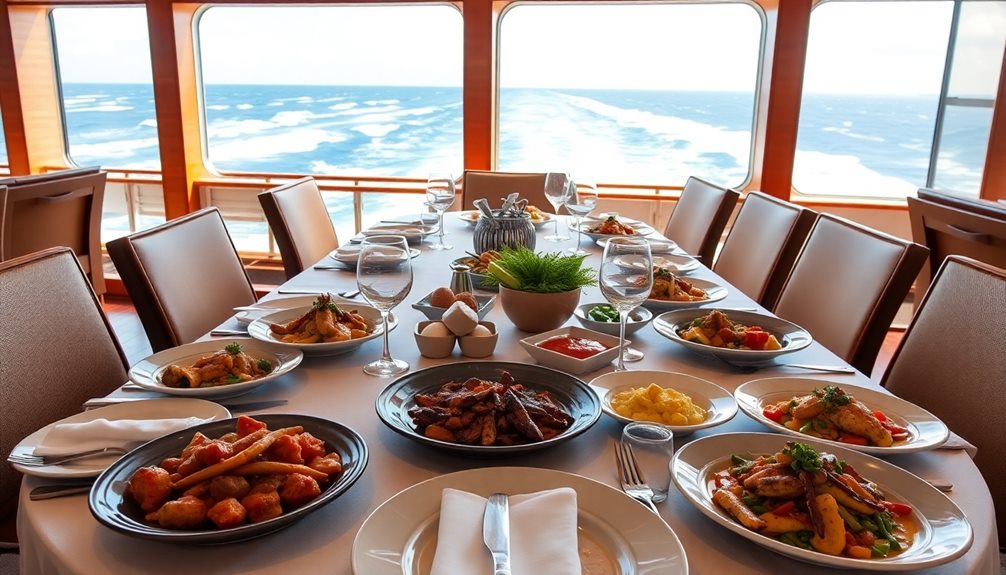
To master how to manage dietary restrictions at resorts, one must first recognize that the resort is a closed ecosystem. Unlike urban dining, where a guest can simply walk to a different restaurant if a menu is unsuitable, the resort guest is often geographically or contractually tethered to a specific set of kitchens. This captive audience model means the resort’s failure to accommodate is not just an inconvenience—it is a total failure of the primary service offering.
A common misunderstanding is the belief that “International” or “Luxury” labels guarantee a baseline of nutritional literacy. In reality, a five-star resort in a remote archipelago may have a sophisticated front-end service but rely on a supply chain where ingredient labels are not in the guest’s native language, or where local staff lack a cultural concept of specific allergies, such as celiac disease or nut anaphylaxis. Oversimplification leads travelers to trust “GF” or “V” icons on a buffet card, ignoring that the same serving spoon may have been used across multiple dishes by other guests minutes prior.
Effective management is therefore a process of “Verified Trust.” It involves identifying the “Single Point of Failure” in the communication chain—usually the transition between the server taking an order and the line cook executing it. To manage these restrictions effectively, a guest must act as their own project manager, ensuring that the information is not just transmitted, but understood and verified at every touchpoint of the dining cycle.
Deep Contextual Background: The Evolution of Resort Catering
The historical trajectory of resort dining has moved from the rigid, fixed-menu “European Plan” of the early 20th century to the sprawling, decentralized buffets of the modern all-inclusive era. Historically, specialized diets were treated as medical anomalies, handled through separate “infirmary” kitchens or ignored entirely. As global travel expanded in the 1990s, the “International Buffet” became the standard, designed for maximum efficiency and caloric output rather than individual customization.
In the last decade, a systemic shift occurred. The rise of diagnosed autoimmune conditions and the mainstreaming of plant-based lifestyles forced resorts to move from “reactive” cooking—making a salad because nothing else was available—to “proactive” menu design. However, this evolution has been uneven. Large hospitality conglomerates have integrated sophisticated POS (Point of Sale) systems that flag allergies, while smaller boutique properties may still rely on verbal handovers between shifts.
By 2026, the industry will have reached a point of “Acoustic Noise” in dietary labeling. With so many guests claiming preferences, those with life-threatening restrictions often find their needs diluted in the sea of general “wellness” requests. Understanding this historical context helps the traveler realize that they are operating in a system designed for the majority, where the “standard operating procedure” is often the enemy of the specific.
Conceptual Frameworks and Mental Models
Applying structured thinking to the dining experience helps in identifying hazards before they result in ingestion.
1. The Swiss Cheese Model of Food Safety
Borrowed from aviation safety, this model suggests that a mistake (an allergen reaching a plate) only happens when the holes in multiple layers of defense align.
-
-
Layer 1: Pre-arrival communication.
-
Layer 2: Arrival meeting with the Sous Chef.
-
Layer 3: Visual inspection of the buffet or menu.
-
Layer 4: Final verbal check with the server. If any layer “catches” the error, the guest remains safe.
-
2. The Buffet-to-Table Entropy Framework
This model posits that the longer a food item sits in a communal space, the higher its “contamination entropy” becomes. A dish that was 100% allergen-free at 6:00 PM when the buffet opened is likely compromised by 8:00 PM due to guest behavior (e.g., dropping a crouton into a soup). The strategy here is to always request “fresh from the kitchen” rather than “fresh from the tray.”
3. The Communication Hierarchy (V-W-V)
-
Verbal: Stating the need.
-
Written: Providing a dietary card in the local language.
-
Visual: Seeing the staff flag the order or change gloves. Failure typically occurs when only one of these three modes is used.
Key Categories of Dietary Complexity and Trade-offs
Managing restrictions is not a monolithic task; different diets carry different “risk profiles” and operational trade-offs within a resort setting.
Decision Logic: Buffet vs. A La Carte
In most resorts, how to manage dietary restrictions at resorts becomes a choice between the variety of the buffet and the controlled environment of an A La Carte restaurant. For high-risk guests, the A La Carte option is nearly always superior, as it allows for a “closed-loop” communication with a single chef and dedicated pan-firing.
Detailed Real-World Scenarios
The Remote Island All-Inclusive
A guest with a severe shellfish allergy arrives at a secluded Maldivian resort.
-
Constraint: All supplies arrive via a weekly barge.
-
Failure Mode: The kitchen runs out of “safe” oil and uses a blended oil that may have been processed near crustacean products.
-
Decision Point: The guest must verify the physical labels of the oils used in the kitchen, not just take the server’s word.
-
Second-Order Effect: Building a relationship with the storage manager becomes as important as the chef.
The Theme-Night Buffet
A Mexican resort hosts a “Street Food” night where multiple live-cooking stations are set up.
-
Constraint: High speed, high smoke, and shared spatulas between taco stations.
-
Failure Mode: A cook uses the same tongs for cheese-filled quesadillas and dairy-free tacos.
-
Mitigation: The guest bypasses the station entirely and requests a “station-mimic” dish to be prepared in the main, clean kitchen.
The Language Barrier in a Budget Resort
A traveler with celiac disease visits a resort where the staff speaks limited English.
-
Decision Point: Does the guest trust the “Gluten Free” label?
-
Failure: The label is used to mean “no bread,” but the sauce contains soy sauce with wheat.
-
Strategy: Use of a “Chef’s Card” with localized technical terms (e.g., trigo, cebada, salsa de soja).
Planning, Cost, and Resource Dynamics
Accommodation is rarely “free,” even if it doesn’t show up on the folio. There are indirect costs in time and opportunity.
Resource Impact Table
Tools, Strategies, and Support Systems
-
Professional Translation Cards: Not generic printouts, but specific cards that detail the risk of cross-contamination (e.g., “even a crumb can make me ill”).
-
Digital POS Flagging: Ensure your profile in the resort’s system is updated by the Front Desk, so every time your room number is swiped, the kitchen receives an alert.
-
Kitchen Tours: Requesting a brief walkthrough of the kitchen during off-peak hours (2:00 PM – 4:00 PM) to see the separation of prep areas.
-
Emergency Buffer Kit: Always carrying 24 hours of shelf-stable, high-protein food (bars, jerky, seeds) to survive a system failure or late-night arrival when kitchens are closed.
-
EpiPen/Medication Protocol: Storing emergency meds in a thermal bag and ensuring the resort’s medical center is aware of your location.
-
Social Media “Vetting”: Joining specific Facebook groups for “Celiac Travel” or “Vegan All-Inclusive” to get unvarnished reports on specific properties.
-
The “Sous Chef Anchor”: Identifying one specific mid-level manager who works the majority of your stay and making them your primary point of contact.
Risk Landscape and Taxonomy of Failures
Disruptions in how to manage dietary restrictions at resorts often follow a taxonomy of compounding risks.
1. Linguistic Ambiguity
The word “nut” may mean “peanuts” in one culture and “tree nuts” in another. “Vegetarian” may include fish in certain regions.
2. The “Busy-Night” Degradation
As resort occupancy hits 90%+, the time staff can spend on “special orders” drops. This is when corners are cut, and cross-contamination increases.
3. Supply Chain Substitution
The chef may intend to serve a safe dish, but the supplier substituted a brand of chicken broth that contains allergens without the chef’s knowledge.
4. The Rotating Shift Gap
A breakfast chef may be fully briefed, but if the lunch chef isn’t, the guest is at risk during the transition.
Governance, Maintenance, and Long-Term Adaptation
Frequent travelers must develop a “Dining Governance” protocol to ensure consistency across different properties.
-
The Three-Day Rule: For the first three days, stick to simple, whole foods (grilled fish, plain rice, fruit) while observing the kitchen’s behavior. Only expand to complex dishes once trust is established.
-
The Review Cycle: After each meal, provide immediate, calm feedback to the server or manager. “The meal was great, and thank you for keeping it dairy-free.” This reinforces the behavior.
-
The Transition Checklist: When moving from one resort to another, or even one restaurant within the same resort, restart the V-W-V communication protocol from scratch. Never assume the “system” carried your data over.
Measurement, Tracking, and Evaluation
How do you evaluate if a resort is actually safe? Use these qualitative and quantitative signals.
-
Leading Indicator: Does the resort ask about allergies during the booking process, or only at check-in? Proactive questioning is a sign of high systemic literacy.
-
Lagging Indicator: The “Reaction Rate”—any symptoms, however minor, indicate a failure in the Swiss Cheese Model.
-
Quantitative Signal: The number of “Safe” vs. “Modified” options on the standard menu. A resort with naturally safe options is lower risk than one where every dish must be “hacked.”
Documentation Examples:
-
Chef Log: “Spoke to Chef Miguel (Lunch). He confirmed a separate fryer for chips. Safe.”
-
Incident Report: “Found a crouton in the ‘GF’ soup at 7:45 PM. Buffet staff notified. Switched to A La Carte.”
Common Misconceptions and Oversimplifications
-
Myth: “Expensive resorts are safer.”
-
Reality: Safety is a function of staff training and kitchen volume, not the nightly rate. A massive 1,000-room luxury hotel is often riskier than a 20-room budget lodge.
-
-
Myth: “The buffet is safer because I can see the food.”
-
Reality: The buffet is the highest-risk area for cross-contamination due to other guests’ actions.
-
-
Myth: “Alcohol is always safe.”
-
Reality: Many tropical drinks use pre-made mixes that contain dairy, gluten binders, or egg whites.
-
-
Myth: “I shouldn’t ‘bother’ the chef.”
-
Reality: Most professional chefs would much rather spend five minutes talking to you than 50 minutes dealing with an ambulance on their property.
-
-
Myth: “Labels are legally binding.”
-
Reality: In many countries, food labeling laws in hospitality are non-existent or loosely enforced compared to packaged retail goods.
-
Conclusion
Mastering how to manage dietary restrictions at resorts is an exercise in proactive advocacy. It requires moving away from the passive “vacationer” mindset and adopting the role of an informed consumer who understands the mechanics of the kitchen. By utilizing structured communication, verifying the supply chain, and maintaining a healthy skepticism of communal dining spaces, travelers can reclaim the joy of the resort experience. The goal is not merely to avoid illness, but to reach a state where the logistics of the diet become a seamless, background process, allowing the traveler to focus on the environment they traveled so far to enjoy.