How to Reduce Travel Costs for Adults Only Trips: A Definitive Manual
The modern travel landscape for adults traveling without children—whether as couples, solo adventurers, or friend groups—is often characterized by a paradox of perceived luxury and hidden volatility. While the absence of child-related logistical constraints suggests a simpler planning process, the “adult-only” market is one of the most aggressively monetized sectors in the hospitality industry. Properties and services branded as adult-exclusive frequently command a significant premium, ostensibly for the promise of tranquility and refined amenities. However, this premium is not always a reflection of proportional value, but rather a result of market positioning and the high disposable income typically associated with this demographic.
Navigating this environment requires a departure from traditional “budget travel” tropes that focus primarily on deprivation or low-cost alternatives. For the mature traveler, cost reduction is not merely about spending less; it is about the strategic preservation of capital through an understanding of inventory perishability, geographic arbitrage, and the unbundling of service layers. To effectively manage a high-quality itinerary without excessive expenditure, one must deconstruct the systemic forces that drive up the costs of child-free excursions, ranging from “romantic” surcharges to the rigid pricing of high-end boutique lodging.
This analysis serves as a flagship reference for the sophisticated traveler who prioritizes intellectual honesty over marketing hype. By examining the structural mechanics of the hospitality economy—including how revenue management algorithms target adult-only windows and how secondary costs can erode a travel budget—we can establish a framework for enduring value. The goal is to move beyond surface-level tips and into the realm of systemic fiscal management, ensuring that every dollar spent generates a measurable return in experience, comfort, and restorative quality.
Understanding “how to reduce travel costs for adult-only trips.”

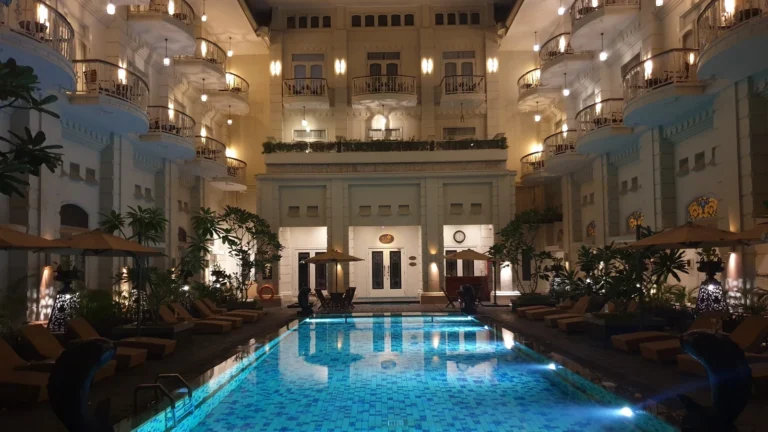
To master how to reduce travel costs for aadult-onlytrips, one must first recognize that “adult-only” is as much a marketing construct as it is a logistical category. In the hospitality sector, the removal of children allows a property to optimize for high-margin services: expansive wine cellars, high-end spas, and sophisticated dining programs. Because these properties do not need to dedicate space to playgrounds or family suites, they often trade volume for higher average daily rates (ADR). Consequently, the traveler is frequently paying for an “exclusive” atmosphere that may or may not align with their actual consumption patterns.
A common misunderstanding is the belief that avoidant pricing—paying more to stay away from family-oriented zones—is a fixed cost. In reality, the price of silence is highly variable. Many travelers overpay by booking “adult-only” branded resorts when a high-end business hotel or a secluded luxury villa in a standard residential area would offer the same acoustic benefits at a fraction of the cost. The oversimplification here lies in trusting the brand label rather than analyzing the property’s physical and social environment.
Furthermore, the “cost” of these trips often balloons due to the lack of “forced frugality” that children impose. Without the need for family-sized meals or structured early-evening activities, adults are more susceptible to “incremental luxury leakage”—the tendency to opt for the premium cocktail, the late-night room service, or the private car transfer. Managing costs in this context requires a disciplined approach to the “Soft Costs” of travel, recognizing that while the base reservation might be reasonable, the ancillary spend in adult-centric environments is designed to be frictionless and expensive.
Deep Contextual Background: The Evolution of Adult-Centric Travel
The historical trajectory of adult-only travel has moved from the exclusionary elite clubs of the early 20th century to the democratic, yet highly segmented, market of the 2121stentury. Initially, adult-only spaces were either the domain of the ultra-wealthy or the “No-Tell Motels” of the mid-century era. The 1970s saw the birth of the “Couples” and “Honeymoon” resorts, which introduced the concept of the all-inclusive adult sanctuary. This was the first time “romance” was systematically bundled and priced as a commodity.
By the early 2000s, the rise of the “DINK” (Double Income, No Kids) demographic transformed the industry. Resorts began to realize that adults without children would pay significantly more for a “serene” environment. This led to a bifurcated market: the high-energy “lifestyle” party resorts and the ultra-luxury “wellness” retreats. However, the post-pandemic era of 2026 has introduced a new complexity: “Age-Agnostic Luxury.” High-end properties are increasingly utilizing architectural zoning—rather than total bans—to separate demographics, yet the “adult-only” label persists as a high-price psychological trigger.
Understanding this history is vital for the cost-conscious traveler. It reveals that the “adult-only premium” is often a historical holdover rather than a reflection of modern operational costs. In many cases, the high price is simply what the market has been trained to bear. Recognizing this systemic inflation allows the traveler to look for “stealth” adult-only options—locations that are naturally child-free due to their location, difficulty of access, or activity profile, but do not carry the formal branding that inflates prices.
Conceptual Frameworks and Mental Models
Applying structured thinking to travel finance allows for a more objective evaluation of expenditures.
1. The Inverse Occupancy Model
Most travelers seek “Adult-Only” resorts to avoid the noise and chaos of family travel. However, the peak season for family travel (school holidays) is often the quietest time for urban business hotels or certain remote eco-lodges. By traveling when families are most active in traditional resorts, adults can find luxury-grade silence in non-branded environments for significantly lower rates.
2. The Unbundled Service Architecture
Modern adult-only resorts often bundle “lifestyle” amenities—poolside DJs, fitness classes, and welcome drinks—into the room rate via mandatory resort fees. A cost-effective mental model treats these as separate products. If you do not intend to use the yoga studio or the “curated” social hour, you are overpaying. Choosing properties with a “Pay-as-you-use” model for amenities is a primary driver of value.
3. Geographic and Curricular Arbitrage
Certain destinations are naturally less attractive to families due to the nature of their attractions (e.g., intensive wine regions, high-altitude trekking, or cities with high-end museum densities). By selecting destinations where the “curriculum” of the trip is inherently adult-oriented, the traveler avoids the price competition for “kid-friendly” infrastructure and the surcharges of dedicated adult-only enclaves.
Key Categories and Strategic Trade-offs
Reducing costs requires a granular understanding of where the budget is allocated. Different “types” of adult travel offer various leverage points for optimization.
| Category | Primary Benefit | Trade-off | Value Strategy |
| Boutique Urban | High cultural access | Small room footprints | Focus on “off-peak” business days (Friday-Sunday). |
| Secluded Eco-Lodges | Natural silence | Higher transport costs | Extended stays to amortize the flight/transfer. |
| High-End Business Hotels | Superior soundproofing | Less “vacation” aesthetic | Use points; amenities are often higher quality/lower cost. |
| Repurposed Short-Term Rentals | Total privacy; kitchens | No on-site service | Look for “Executive” rentals in non-tourist districts. |
| Shoulder-Season Resorts | Full amenities at 40% off | Variable weather | Book hotels with robust indoor spa/wellness facilities. |
Decision Logic: Branded vs. De Facto Adult-Only
The most critical decision point in how to reduce travel costs for adult-only trips is whether to pay for the label or the environment. A “De Facto” adult-only stay—such as a quiet boutique hotel in a university district—offers the same child-free experience as a branded resort but bypasses the “Romance/Luxury” markup.
Detailed Real-World Scenarios
The European Wine Region (High vs. Low Season)
A couple wants to visit Tuscany.
-
The Error: Booking an “Adult-Only Boutique Villa” in June.
-
The Optimization: Booking a high-end apartment in the center of a small town like Montepulciano in late October.
-
Outcome: 60% reduction in lodging costs. The environment is naturally child-free because school is in session, and the “tourist infrastructure” has cooled, leading to better restaurant availability and lower prices.
The Urban “Anti-Business” Weekend
Two friends are traveling to London.
-
The Error: Staying at a trendy adult-only hotel in Shoreditch.
-
The Optimization: Staying at a 5-star hotel in the Canary Wharf financial district on a weekend.
-
Outcome: Business hotels in financial hubs often see occupancy drop to 30% on weekends. Rates plummet, yet the rooms are larger, the walls are thick (for business privacy), and the “adult” atmosphere is maintained because the area is devoid of family attractions.
The All-Inclusive “Luxury” Anchor
A group traveling to the Caribbean.
-
The Constraint: They want the ease of all-inclusive but find adult-only resorts are $800+/night.
-
The Optimization: Choosing a high-end family resort with a dedicated, physically separated “Adults-Only Wing.”
-
Decision Point: Ensure the “Adult Wing” has its own pool and dining.
-
Outcome: You benefit from the scale of the family resort (lower overall room rates) while utilizing the “Adults Only” enclave for 90% of your time.
Planning, Cost, and Resource Dynamics
The economics of adult-only travel are heavily influenced by “The Convenience Tax.” Adults are often willing to pay more to avoid logistical friction, but this is exactly where the most significant savings are found.
Estimated Cost Breakdown (Adult-Only Perspective)
| Component | % of Budget | Variability Factor | Strategy |
| Lodging (Branded) | 45-60% | High (Seasonality) | Use business-district hotels or “stealth” rentals. |
| Dining & Spirits | 20-30% | Moderate (Location) | Lunch is the main meal; avoid “resort cocktails.” |
| Transportation | 10-15% | Low (Distance) | Pre-booked private cars vs. resort shuttles. |
| Activities | 5-10% | Moderate (Type) | Direct booking with operators vs. concierge. |
Tools, Strategies, and Support Systems
-
Metasearch Aggregators with “Business” Filters: Use filters that prioritize high-speed Wi-Fi and soundproofing—features often absent in family-focused searches but essential for adult-only comfort.
-
Inventory Perishability Apps: Services like “HotelTonight” are particularly effective for adult-only trips because adults have the spontaneous flexibility to book last-minute that families lack.
-
Credit Card “Transfer Partners”: Leveraging points for business-class seats or high-end hotel stays is more effective for 1-2 travelers than for a family of four, where point requirements are often prohibitive.
-
Satellite Imagery (The “Fence” Check): Before booking an adult-only wing of a family resort, use Google Earth to check the physical distance between the adult pool and the “kids’ splash pad.” Sound travels; if they are adjacent, the premium is wasted.
-
Dining Reservation Platforms: Using apps to find “off-site” gourmet dining avoids the 300% markup on resort-based wine and food.
-
VPN for Geographic Pricing: Adult-only resorts often show higher prices to users in high-income ZIP codes. Using a VPN can occasionally reveal “local” or lower-tier pricing models.
-
Direct Sales Manager Contact: For stays longer than 5 days, emailing the hotel’s Sales Manager directly (not the reservation desk) to ask for an “Executive Rate” or a “Quiet Room Package” often yields discounts not seen on Expedia or Booking.com.
Risk Landscape and Failure Modes
Even a well-planned trip on how to reduce travel costs for adult-only trips can fail if the risks are not taxonomized.
-
The “Hollow” Luxury Risk: Finding a cheap adult-only resort that achieves its price point by cutting staff. The result is a “serene” environment that feels neglected.
-
The “Shared Boundary” Failure: An adult-only property that shares its beach or lobby with a massive family resort next door. You pay the premium, but the “Acoustic Shield” is nonexistent.
-
The “Resort Fee” Compounding: A low base rate that is doubled by mandatory fees for “adult amenities” you don’t use (e.g., sunrise yoga, guided hikes).
-
The “Solo Supplement” Trap: For solo adult travelers, the “double occupancy” pricing model of most adult resorts is a major hidden cost.
Governance, Maintenance, and Long-Term Adaptation
To maintain a long-term strategy of high-value travel, one must move from “one-off” planning to a “governance” model. This involves a continuous cycle of review and adjustment.
The Adult Traveler’s Quarterly Review
-
Inventory Audit: Review upcoming “shoulder seasons” for the next 12 months.
-
Point Devaluation Monitoring: Ensure that travel rewards aren’t losing value while sitting in an account.
-
Destination Research: Identify “secondary” cities or regions that are trending upward but haven’t yet reached “mass family tourist” status.
Layered Checklist for Every Booking
-
Is this a “Branded” or “De Facto” adult environment?
-
What is the “Resort Fee” as a percentage of the base rate?
-
Are there high-end business hotels within 2 miles of this luxury resort?
-
Does the itinerary leverage “business-traveler” pricing (weekends) or “leisure-traveler” pricing (weekdays)?
Measurement, Tracking, and Evaluation
True fiscal optimization is measured by the “Experience-to-Dollar” ratio.
-
Leading Indicators: Number of “off-peak” days booked; percentage of lodging secured via non-branded channels.
-
Lagging Indicators: Total cost per day compared to a branded all-inclusive; qualitative “restoration score” after the trip.
-
Qualitative Signals: The ease of getting a dinner reservation; the lack of ambient noise in the room; the quality of staff interaction.
Documentation Example:
Comparison Log: Stayed at [Resort A – Adult Branded] in March ($600/nt) vs. [Business Hotel B – Urban Luxury] in June ($250/nt). Both offered child-free pool environments. Total savings: $2,450. Result: Hotel B offered better service and quieter nights.
Common Misconceptions and Oversimplifications
-
Myth: “All-inclusive is the best way to save on adult trips.”
-
Reality: Only if you are a high-volume consumer of alcohol and on-site dining. For the average adult, the “unbundled” approach is almost always 30% cheaper.
-
-
Myth: “Airbnb is cheaper than hotels for couples.”
-
Reality: With 2026’s cleaning fees and service charges, a boutique hotel with free breakfast and “no chores” is often more cost-effective for short stays.
-
-
Myth: “Adults-only resorts are for romance.”
-
Reality: They are for profit-optimization. “Romance” can be found in a $150-a-night cabin just as easily as a $900-a-night overwater bungalow.
-
-
Myth: “Traveling in the off-season means bad weather.”
-
Reality: “Shoulder seasons” often offer the best weather—not too hot, not too cold—with the added benefit of 40% lower prices.
-
-
Myth: “Status doesn’t matter for budget travel.”
-
Reality: Hotel status is more valuable for adults (room upgrades, free breakfast, late checkout) than for families, where upgrades are often unavailable for 4+ people.
-
Conclusion
The pursuit of how to reduce travel costs for adult-only trips is ultimately an exercise in intellectual and fiscal autonomy. It requires a rejection of the “packaged” vacation in favor of a bespoke, unbundled approach. By understanding that the highest costs in adult travel are often the result of marketing labels and convenience surcharges, the traveler can pivot toward “De Facto” adult environments—business hotels, secondary cities, and shoulder-season boutique stays. This strategy does not just save money; it elevates the quality of the journey, trading the “processed” luxury of a branded resort for the authentic, quiet sophistication of a well-researched itinerary. The true luxury in travel is not found in the price tag, but in the silence and freedom that a well-managed budget provides.