How to Avoid Noisy Resort Rooms: A Master Guide to Peaceful Stays
The pursuit of silence within the modern resort environment is increasingly a matter of architectural navigation and strategic positioning. As hospitality brands strive for higher density and more integrated social spaces, the physical buffer between communal entertainment and private quarters has thinned. For the discerning traveler, the quality of rest is no longer guaranteed by a luxury price point; it is a variable that must be actively managed through pre-travel analysis and on-site advocacy.
This tension between a resort’s “vibe”—often characterized by poolside music, expansive atriums, and centralized dining—and the guest’s need for a restorative environment creates a complex logistical challenge. Understanding the physics of sound transmission in multi-story structures, the seasonal shifts in guest demographics, and the invisible “noise maps” used by front-office staff is essential. It is not merely about requesting a “quiet room” at check-in; it is about deconstructing the resort’s layout to predict where mechanical, social, and environmental sounds will inevitably converge.
The following analysis treats the resort room not as an isolated sanctuary, but as a single node within a sprawling, high-traffic infrastructure. By examining the systemic causes of acoustic disruption—ranging from PTAC (Packaged Terminal Air Conditioner) unit vibration to the resonance of service elevators—we can establish a framework for selecting accommodations that prioritize auditory privacy. This guide serves as a flagship reference for those who view silence as a non-negotiable component of the travel experience.
Understanding “how to avoid noisy resort rooms”

To master how to avoid noisy resort rooms, one must first discard the notion that noise is a subjective nuisance. In a professional hospitality context, noise is a quantifiable failure of insulation or zoning. The primary challenge lies in the fact that resort marketing is incentivized to showcase proximity to “the action,” while the engineering limitations of those very locations are rarely disclosed. A room that is “steps from the beach” may also be steps from the 6:00 AM tractor that rakes the sand.
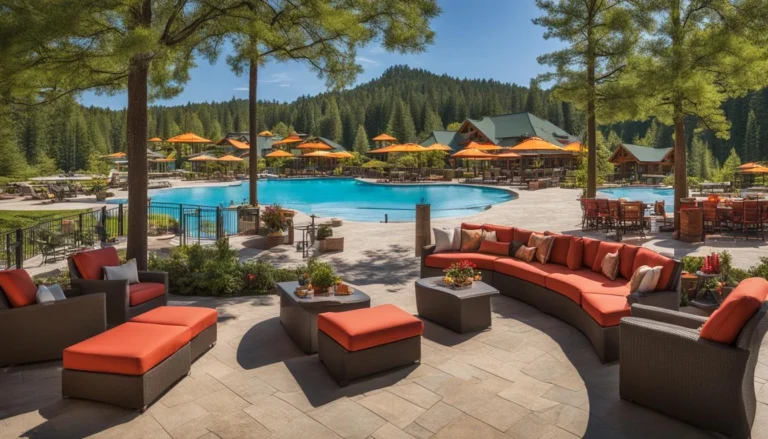
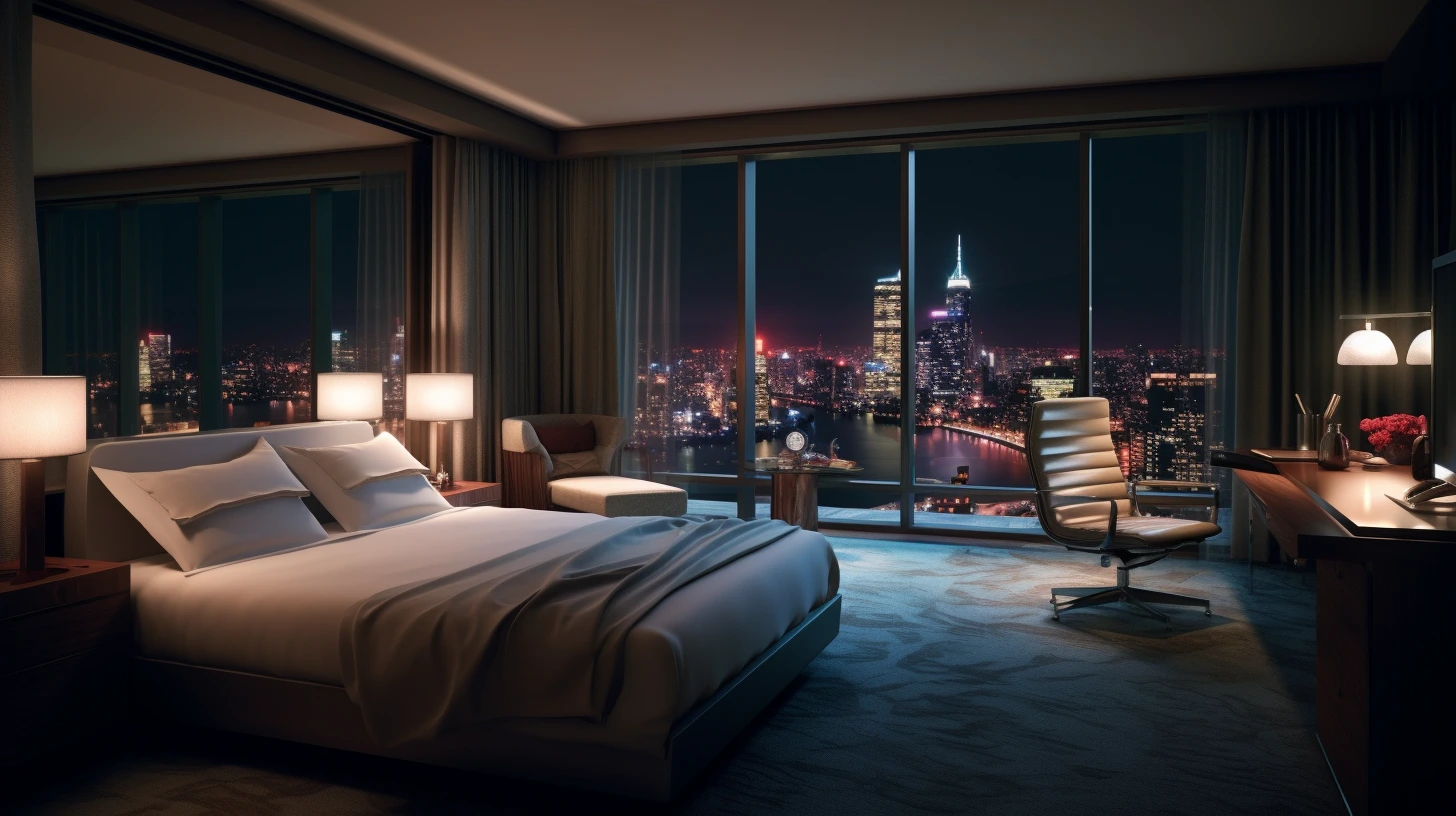
A common misunderstanding is the belief that higher floors are inherently quieter. While elevation can mitigate street-level traffic noise, it often exacerbates exposure to roof-mounted HVAC systems or elevator mechanical rooms. Furthermore, the modern “open-concept” resort—featuring vast lobbies and interior balconies—serves as a parabolic reflector for sound. A conversation in the bar at midnight can travel up an atrium and reach a tenth-floor balcony with surprising clarity.
Effective management of this issue requires a shift from reactive complaints to predictive selection. It involves analyzing the resort’s footprint for “secondary sound sources,” such as ice machines, housekeeping staging areas, and connecting-room doors. These features are often omitted from floor plans but represent the most frequent causes of sleep disruption. Mastering this process means looking past the aesthetic finishes of a suite to understand the structural and operational rhythms of the building.
Deep Contextual Background: The Evolution of Resort Soundscapes
The historical trajectory of resort construction has moved from heavy masonry and sprawling, separated villas to high-density, steel-and-glass towers. In the early 20th century, luxury hotels utilized thick plaster walls and heavy drapery that acted as natural acoustic dampeners. As construction costs rose and the “International Style” of architecture took hold, building materials became lighter and more resonant.
The 1980s and 90s introduced the “mega-resort” concept, which prioritized centralized entertainment. This era saw the rise of the massive pool complex and the integrated shopping promenade, both of which generate significant ambient noise. Simultaneously, the industry shifted toward PTAC units—those through-the-wall heating and cooling systems—because they are cheaper to maintain than central air. However, they are also significantly louder and introduce outdoor noise through their chassis.
By 2026, the hospitality industry will face an “Acoustic Debt.” Many properties are aging, their window seals are failing, and the soundproofing standards of thirty years ago are insufficient for today’s high-power audio systems used at pool decks and event spaces. Understanding this systemic evolution helps the traveler realize that a resort’s age is often a more reliable indicator of noise potential than its star rating.
Conceptual Frameworks and Mental Models
When evaluating a potential booking, applying these mental models can help predict acoustic failure before it occurs.
1. The Proximity-Vibration Matrix
This framework distinguishes between airborne noise (music, voices) and structure-borne noise (vibrations from elevators, slamming doors, or heavy footfalls). A room may be far from the bar (avoiding airborne noise) but adjacent to a laundry chute (suffering from structure-borne vibration).
2. The Service Path Model
Resorts are machines that must be “fed.” This model requires the guest to identify the hidden paths of the staff. Housekeeping carts, room service trays, and trash removal all follow specific routes. Mapping these paths—often near elevators or service stairs—identifies high-frequency noise zones that operate 24 hours a day.
3. The Sound Shadow Concept
Borrowed from physics, this model suggests looking for rooms that are physically “shielded” by the building’s own mass. For example, a room on the back side of a wing that faces away from the pool is in a “sound shadow.” Even if it is closer to the music source in terms of raw footage, the building itself acts as a massive acoustic baffle.
Key Categories of Resort Noise and Trade-offs
Identifying the specific category of noise allows for more precise room requests. Each “quiet” choice often involves a trade-off in convenience or view.
| Noise Category | Primary Source | Trade-off for Mitigation |
| Mechanical | HVAC, Elevators, Plumbing | May require a room further from the elevator (longer walk). |
| Operational | Housekeeping, Room Service | Often requires a room at the end of a corridor (slower service). |
| Social/Recreational | Pool bar, Kids’ club, Lobbies | Usually results in a “parking lot” or “garden” view instead of “ocean front.” |
| Structural | Connecting doors, thin walls | May limit the ability to book adjacent rooms for families. |
| Environmental | Traffic, Waves, Wildlife | Might require a lower floor or an interior-facing courtyard. |
Decision Logic for Room Selection
-
Prioritize the “End-of-Hall” Suite: Minimizes foot traffic and eliminates one neighbor.
-
Avoid Connecting Doors: These are the weakest link in room-to-room soundproofing.
-
Check the “Above and Below”: A room under a gym or above a ballroom is a guaranteed failure during event hours.
Detailed Real-World Scenarios
The Oceanfront Trap
A traveler books an “Oceanfront” room on the second floor of a Caribbean resort.
-
The Conflict: The room overlooks the beach, but also the resort’s primary walkway and the 5:00 AM beach-cleaning equipment.
-
The Failure: The guest assumed “oceanfront” meant “serene.” In reality, it is the highest-traffic zone of the property.
-
The Resolution: Requesting a “High-Floor Ocean View” rather than “Ocean Front” often moves the guest above the pedestrian noise floor while maintaining the aesthetic benefit.
The Atrium Echo
An urban resort features a stunning 15-story glass atrium with a bar at the base.
-
The Conflict: Guest rooms open onto interior corridors overlooking the bar.
-
Constraint: The glass and hard marble surfaces create a “reverb chamber” effect.
-
Decision Point: Even a room far from the bar will hear the “clinking” of glasses. The only solution is an exterior-facing room with no connection to the atrium.
The Mechanical Room Resonance
A guest is assigned a room on the top floor, expecting a quiet, premium experience.
-
The Conflict: The room is directly beneath the resort’s cooling towers and elevator motors.
-
Second-Order Effect: The low-frequency hum is not blocked by earplugs, as it is a vibration felt through the bed frame.
-
Outcome: To avoid this, one should aim for the “Goldilocks Zone”—two to three floors below the top and at least five rooms away from the elevator bank.
Planning, Cost, and Resource Dynamics
The pursuit of how to avoid noisy resort rooms often carries a financial or “opportunity” cost. Silence is frequently sold as a premium—think of “Adults Only” wings or “Exclusive Enclave” tiers.
The Financial Landscape of Quietude
| Strategy | Estimated Cost Impact | Potential Resource Drain |
| Room Category Upgrade | +15% to 40% | Direct financial cost. |
| Off-Peak Scheduling | -20% (Savings) | Limited availability of amenities. |
| Corner Room Request | $0 (but rare) | Significant time spent in pre-arrival communication. |
| Third-Party Soundproofing | $50 – $200 | Cost of portable machines and high-fidelity earplugs. |
Tools, Strategies, and Support Systems
-
Satellite Imagery Analysis: Before booking, use Google Earth to identify nearby construction sites, nightclubs, or industrial zones that are not visible in resort-provided photos.
-
Digital Floor Plan Repositories: Use enthusiast forums to find actual fire escape maps. These reveal the proximity of your room to elevators, laundry chutes, and connecting doors.
-
White Noise Synthesizers: Not all white noise is equal. “Brown noise” (lower frequency) is more effective at masking the “thump” of bass from a poolside DJ.
-
The “Pre-Arrival Brief”: Sending a polite, specific email to the Front Office Manager 72 hours before arrival is more effective than asking at the desk. Specify “No connecting door” and “Away from service elevators.”
-
Acoustic Seal Checks: Upon entering a room, check the door sweep. If light is visible under the door, sound will enter. A rolled-up towel is a low-tech but effective tool.
-
Loyalty Status Leverage: High-tier members are often given the “quietest” rooms because hotels know these travelers are the most sensitive to rest quality.
Risk Landscape and Failure Modes
Even with perfect planning, certain “Compounding Risks” can ruin a stay.
-
The “Unscheduled Maintenance” Event: A resort decides to trim all palm trees with chainsaws at 7:00 AM on a Tuesday.
-
The Wedding Party Surge: A quiet resort is suddenly taken over by a 200-person wedding that utilizes the courtyard beneath your “quiet” room.
-
The “Adjacent Renovation”: Hotels often renovate rooms in blocks. If you are next to a “soft renovation” zone, you will deal with drilling and hammering during daylight hours.
Failure Mode: Relying solely on the “Request” field in an OTA (Online Travel Agency) booking. These notes are rarely read by the room’s controller. Direct communication is the only way to mitigate these risks.
Governance and Long-Term Adaptation
For the frequent traveler, managing noise requires a “Post-Stay Review” cycle.
-
Documentation: Record the room number and the specific noise profile (e.g., “Room 402 – excessive elevator whine”).
-
Feedback Loops: Inform the hotel management specifically about structural noise. They may not be able to fix it for you, but they may offer a credit or a better room for a future stay.
-
Adaptive Booking: If a specific brand (e.g., Westin or Four Seasons) consistently delivers better acoustic insulation, that “brand standard” becomes a governance rule for future travel planning.
Measurement, Tracking, and Evaluation
How do you know if your strategy for avoiding noisy resort rooms is working?
-
Leading Indicator: The percentage of bookings where you received a “Quiet Zone” confirmation email before arrival.
-
Lagging Indicator: The number of nights where “unplanned wake-ups” occurred.
-
Qualitative Signal: The ease with which you can hold a conversation at normal volume within the room while the resort is at peak activity.
Documentation Example:
Project: Maui Resort Stay. Room 505. Goal: Zero mechanical noise. Result: Success on mechanical, failure on social (neighbor’s TV audible through connecting door). Adjustment for next time: Hard requirement for ‘No Connecting Door’.
Common Misconceptions and Oversimplifications
-
Myth: “Top floor is always best.”
-
Correction: Often contains the loudest mechanical equipment and the highest wind noise.
-
-
Myth: “New hotels have better soundproofing.”
-
Correction: Many new “lifestyle” hotels use thin drywall and polished concrete floors that reflect sound; older luxury hotels with thick carpets and heavy drapes often perform better.
-
-
Myth: “A ‘Mountain View’ is quieter than ‘Pool View’.”
-
Correction: Only if there isn’t a highway or a delivery bay on the mountainside.
-
-
Myth: “Earplugs solve everything.”
-
Correction: Earplugs cannot stop the low-frequency vibration of a subwoofer or an elevator motor.
-
-
Myth: “The hotel will move me if it’s noisy.”
-
Correction: If the resort is at 100% occupancy (common during peak season), there is nowhere to move you. Pre-selection is your only defense.
-
Conclusion
The ability to secure a quiet environment in a modern resort is a skill that blends architectural intuition with proactive communication. As hospitality spaces become more multi-functional and “vibrant,” the burden of finding tranquility shifts to the guest. By understanding the systemic nature of noise—how it travels through steel, reflects off glass, and follows the paths of service—one can navigate the resort map with confidence. Silence in 2026 is a luxury that must be engineered, not just requested.