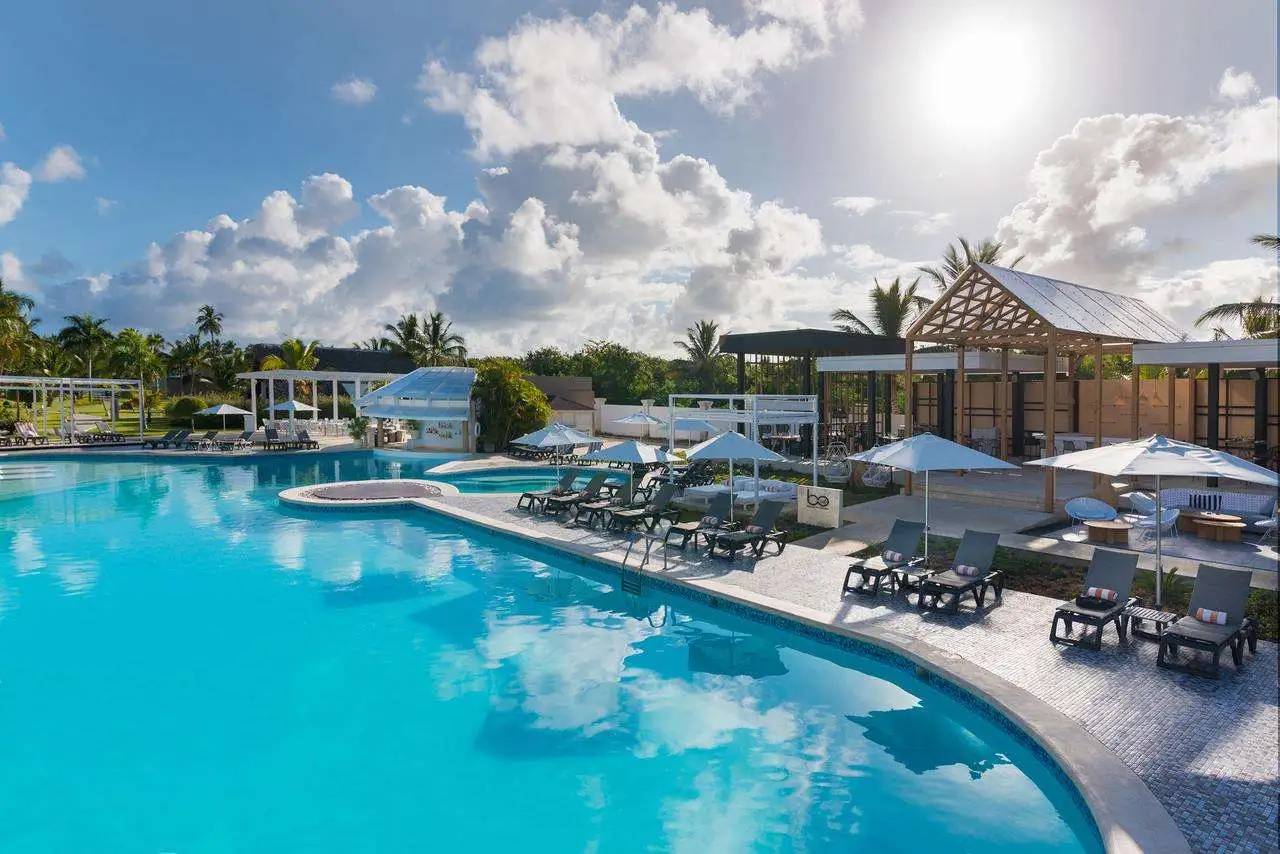
All Inclusive Adults Only Resort Deals: A Definitive 2026 Editorial Audit
The structural integrity of a modern hospitality strategy is increasingly defined by the precise segmentation of guest demographics to ensure an uncompromising service delivery. Among these segments, the child-free all-inclusive model has transitioned from a niche romantic category into a sophisticated operational standard designed for high-fidelity restoration. When the variable of pediatric presence is removed from a resort environment, the entire architectural and service-led ecosystem shifts. This is not merely a restriction on age; it is an intentional engineering of atmospheric density, acoustic control, and culinary complexity that would be fundamentally unachievable in a multi-generational setting.
In the 2026 landscape, the discerning traveler views the absence of children not as a form of exclusion, but as a prerequisite for “Cognitive Bandwidth Recovery.” The ambient noise and logistical unpredictability inherent in family-centric resorts create a subtle but persistent cognitive load. By choosing an environment with a strict age floor, guests are opting into a managed social contract where the cadence of the day is dictated by adult rhythms. This allows for the implementation of “Hushpitality” principles—where silence is treated as a premium amenity and service is designed to be predictive rather than reactive.
Navigating the current market requires a shift from superficial discount-hunting to a structural audit of sovereign nodes. These are properties that operate as self-contained ecosystems of adult leisure, where every touchpoint—from the height of the poolside furniture to the complexity of the molecular mixology program—is calibrated for a mature palate. This editorial analysis serves as a definitive architecture for understanding these environments, moving beyond the “honeymoon” trope to examine the systemic attributes that define the highest tier of child-free hospitality.
Understanding “all-inclusive adults-only resort deals.”

To effectively evaluate all-inclusive adults-only resort deals in the modern market, one must look beyond the simple price-per-night metric. A common misunderstanding is that a “deal” is synonymous with a price drop. In the high-end hospitality sector, a true deal is a value-density proposition: the ratio of specialized inclusions to the base rate. In an editorial context, a top-tier deal is defined by how the property reinvests the resources saved by excluding children—such as childcare facilities and high-volume family dining—into specialized adult services like high-fidelity wellness suites or precision-based culinary labs without charging ancillary fees.
The risk of oversimplification in this category is that travelers often ignore the Social Saturation Index. A resort may offer a child-free environment at a steep discount, but if it is at 100% capacity with 500 adults in a compressed physical footprint, the ambient noise and wait times may be higher than at a low-density family boutique resort. Therefore, identifying the “best” deals requires an audit of the property’s architectural intent. Does the price include “sovereign isolation”? True luxury deals prioritize in-villa services and partitioned beach enclaves over the “forced socialization” of communal dining and programmed poolside activities.
Another layer of complexity is Inclusion Integrity. Many properties claim to be all-inclusive but maintain high paywalls for the very services adults prioritize, such as spa access, premium mixology, or private transport. A definitive deal must address the elimination of this transactional friction. When the barrier between the guest and the experience is removed, a psychological state of “flow” is achieved—a state where the guest never has to negotiate their desires against a bill at the point of service.
Deep Contextual Background: The Evolution of Demographic Silos
The historical trajectory of child-free hospitality began as a reaction to mid-20th-century travel democratization. As international air travel reached the nuclear family, traditional high-end retreats lost their quietude. The early 1970s introduced the first ‘couples-only’ resorts in the Caribbean. Operators marketed these as romantic escapes, though they remained structurally rudimentary. These properties functioned as gated communities. There, the absence of children served as the primary ‘amenity.’ By the 1990s, the model shifted toward the ‘Luxury Mega-Resort.’
Developers used a scale to provide an exhaustive list of activities. While successful, these properties often projected a ‘standardized’ feel. Entering 2026, we have moved into the ‘Whycation’ Phase. This global movement prizes intentionality. ‘Intentional Communities’ now define modern child-free hospitality. These retreats focus on specific outcomes like medical wellness, professional networking, or ‘Hushpitality.’ High-fidelity experiences require the removal of the child demographic as an operational necessity. This focus allows staff to address a more nuanced set of guest needs.
Conceptual Frameworks and Mental Models
When auditing potential travel assets, three specific frameworks should be used to evaluate their systemic quality.
1. The Acoustic Insulation Model
In a child-free environment, the threshold for noise tolerance is significantly lower. This framework audits the property’s Acoustic Integrity—the quality of soundproofing between suites, the placement of mechanical equipment away from guest zones, and the management of ambient sound in communal areas. A “best” deal treats silence as a controllable variable rather than an accidental byproduct.
2. The Transactional Friction Model
Luxury is the absence of a signature. This model evaluates how many times a guest must interact with a bill or a payment system during their stay. Top-tier deals are those that utilize Invisible Logistics, where preferences are noted pre-arrival, and inclusions are handled without the need for constant guest verification.
3. The Staff-to-Guest Saturation Index
In adults-only environments, the expectation is often predictive service. This requires a specific ratio—ideally pushing toward 1.5 staff members per guest. This ensures that the staff is not merely responding to requests but is observing guest behavior to anticipate needs—such as a fresh towel or a specific drink—before they are vocalized.
Key Categories and Operational Trade-offs
Selecting a deal requires understanding that every operational choice involves a trade-off. There is no singular “best” hotel, only the best alignment of resources with guest intent.
Comparative Framework of Luxury All-Inclusive Models
| Model Type | Primary Benefit | Key Trade-off | Ideal For |
| Sovereign Wellness Retreat | Radical restoration; medical-grade health | Rigid schedules; dietary limits | Recovery & Reset |
| High-Engagement Social Enclave | Networking; high-energy socialization | High ambient noise; low privacy | Solo travelers & Socialites |
| Boutique “Hushpitality” | Silence; hyper-personalization | Limited on-site variety | Privacy & Nuance |
| Adventure/Charter Node | Access to rare biomes; exclusivity | Logistical complexity; physical rigor | Active Explorers |
| Urban Managed Suite | Cultural access; walkability | Limited outdoor space | Short-stay professionals |
The realistic decision logic follows the principle of “atmospheric matching.” A guest seeking intellectual solitude will find a High-Engagement Social Enclave to be a service failure, despite the high cost and luxurious amenities, because the social density violates their cognitive requirements.
Detailed Real-World Scenarios
To move beyond abstraction, let us examine how different constraints force different decision points.
The High-Stress Professional Reset
-
The Constraint: An individual coming off a 90-day high-stakes project.
-
Failure Mode: Choosing a “social” adults-only resort with loud music and group excursions.
-
The Optimal Choice: A boutique “Hushpitality” property where the primary activity is “managed silence” and all dining is handled in-villa or in partitioned garden nooks.
The Multi-Couple Social Milestone
-
The Constraint: Three couples celebrating a 40th birthday together.
-
Failure Mode: A rigid wellness retreat where social talking is discouraged.
-
The Optimal Choice: A high-engagement social enclave that offers Zoned Interactivity—private areas for the group to celebrate, balanced with vibrant communal bars and events.
Planning, Cost, and Resource Dynamics
The financial structure ofall-inclusive adults-onlyy resort deals often reflects the cost of “exclusion.” Maintaining an environment where no children are present requires a higher price floor to offset the lost revenue from family bookings and to fund the higher staff-to-guest ratios required for adult-centric service.
Range-Based Resource Estimation (Daily Total per Person)
| Tier | Price Range (USD) | Core Value Proposition | Hidden Variability |
| Standard Premium | $250 – $450 | Reliability, basic age enforcement, and standardized F&B. | 20-30% in add-ons |
| Upper Luxury | $500 – $1,200 | 1:1 service ratio; top-shelf inclusions; bespoke excursions. | 10% in add-ons |
| Ultra-Niche/Sovereign | $1,500+ | Total privacy; medical/concierge staffing; zero friction. | Zero variability |
The Opportunity Cost of a poorly chosen plan is the time spent on logistical maintenance. If a guest spends an hour a day checking bills or trying to find a quiet spot, they are losing significant portions of their actual leisure time.
Tools, Strategies, and Support Systems
Maximizing the utility of an adults-only stay requires a proactive strategy that begins weeks before arrival.
-
Pre-Arrival Concierge Deep-Dive: Establishing a relationship with the on-site team 14 days before arrival to secure high-demand reservations and customize the mini-bar/pillow menu.
-
Radius of Autonomy Mapping: Identifying the property’s “Quiet Zones” versus “Social Zones” immediately upon arrival to avoid accidental overstimulation.
-
Tiered Amenity Audits: Specifically asking for the “exclusions list” before booking to avoid on-site disappointment regarding premium spa treatments or off-site transport.
-
Acoustic Mapping: Requesting floor plans to ensure suites are not adjacent to elevators, ice machines, or late-night bars.
-
The Service Recovery Protocol: Knowing who the senior duty manager is on Day 1 to ensure any service lapses are handled with zero friction.
-
Staff Continuity: If visiting a regular destination, request the same butler or concierge to build long-term institutional knowledge of your preferences.
Risk Landscape and Failure Modes
Service failures in this sector are often subtle but compounding.
-
The Leniency Leak: When a resort makes “one-time” exceptions for families during holiday seasons, breaking the adult-only promise and ruining the atmospheric integrity.
-
Atmospheric Drift: When a property marketed for “peace” becomes a de facto “party resort” due to a specific group booking, leading to a mismatch in guest expectations.
-
Inclusion Creep: The gradual removal of premium services from the “inclusive” bundle, forcing guests into transactional friction during their stay.
Governance, Maintenance, and Long-Term Adaptation
A successful stay requires an “Audit and Review” cycle.
-
The 24-Hour Check-in: Within the first day, guests should audit their Radius of Autonomy—how much of the property feels accessible and comfortable without social pressure.
-
Adjustment Triggers: If noise levels or service speed fall below the agreed-upon SLA (Service Level Agreement), a “service recovery” protocol should be triggered immediately by the concierge.
Measurement, Tracking, and Evaluation
A successful adults-only stay is measured by qualitative signals:
-
The Restoration Metric: The degree to which the guest feels “mentally at zero” or better upon departure.
-
Leading Indicator: The presence of a “pre-arrival” concierge who asks about specific atmospheric preferences (e.g., preferred pillow firmness or “do not disturb” windows).
-
Lagging Indicator: The total number of “transactions” signed for during the week. (Fewer is better).
Common Misconceptions
-
“Adults-only means it’s for couples”: False. Many of the best plans focus on solo travelers seeking professional networking or wellness.
-
“It’s more expensive than family resorts”: When you factor in the higher quality of F&B and the higher staff-to-guest ratio, the value per hour is often superior.
-
“They are always quiet”: Some of the loudest, most high-energy environments in hospitality are adults-only party enclaves.
Ethical and Practical Considerations
The rise of child-free hospitality raises questions about the ‘Sovereignty of Space.’ Travelers hold the right to seek specific environments. However, resorts must manage their labor practices and environmental impacts ethically. A ‘sovereign node’ should not function as a fortress of indifference. Instead, it must serve as a model for high-resource hospitality. Successful properties integrate themselves into the local community. They achieve this through fair wages and sustainable resource management. These actions ensure that focused service benefits both the guest and the local ecosystem.
Conclusion
The selection of all-inclusive adults-only resort deals is a tactical exercise in managing one’s own leisure environment. It is a shift from being a “visitor” to being a “sovereign guest” in a space designed to uphold a specific standard of adult restoration. As the industry moves toward hyper-personalization, the properties that thrive will be those that view the absence of children not as a restriction, but as a foundational design element that allows for the highest possible fidelity of service.